Essays, notes, and process pieces from the road: on direction, on the documentary's relationship to its subjects, and on the quiet hour before everything starts moving.
Filming with the Nightmare: behind the scenes of LSS’s new season.
We are telling the story of Carlos Prates, and introducing the world to the real Nightmare of the UFC demands a visual language worthy of the character.
This season carries a special meaning for me. We are telling the story of Carlos Prates, and introducing the world to the real Nightmare of the UFC demands a visual language worthy of the character.
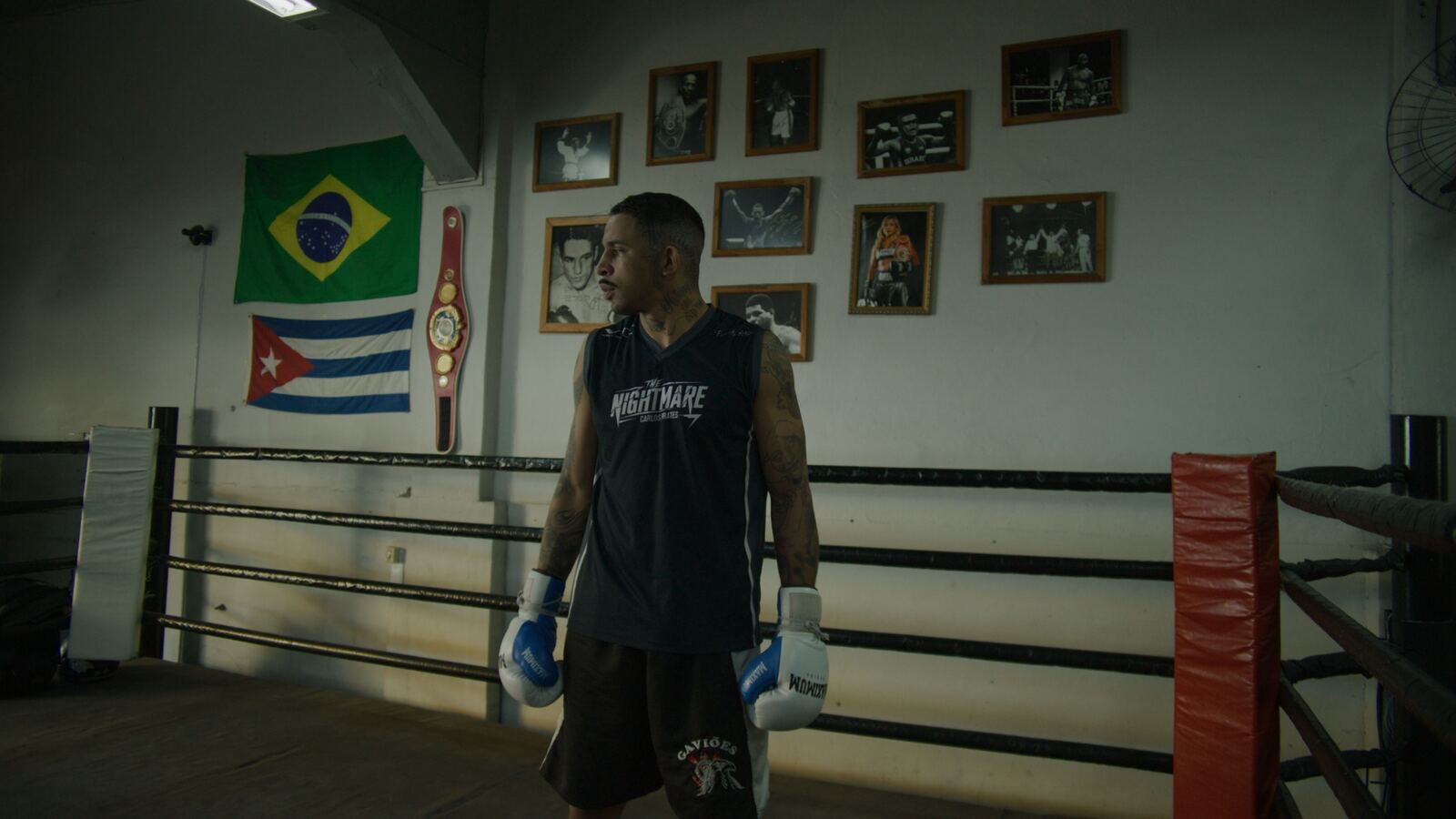
Prates in the ring at The Fighting Nerds gym, São Paulo.
The technical choices
This season, Ton Souza, our director of photography, and I decided to bring two new lenses into the project in pursuit of true cinematic authenticity. It is a language we have been watching and admiring in other productions.
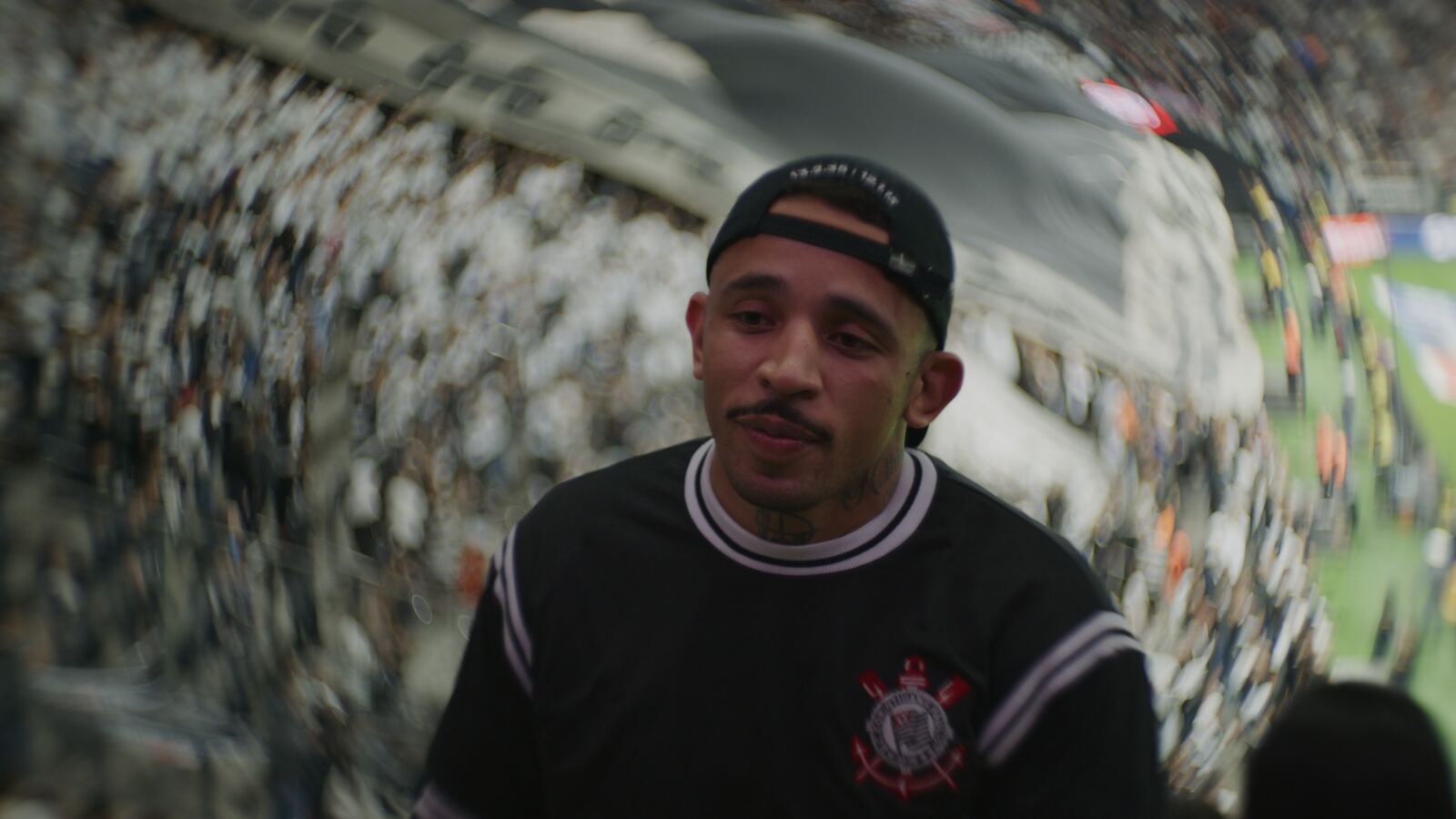
The first is a super zoom, which allows us dramatic zooms and more screen time in each shot. The second is a Petzval, a vintage lens with a distinctive bokeh: it creates a halo around the central character. We will reserve it for specific, special shots, particularly during our filming in Thailand and Los Angeles, and for the interviews. The testimonial delivered straight to camera is one of the pillars of this series, and we wanted it to have a visual identity of its own.
Through the Petzval: the halo that frames the character.
For everything else, we continue with the RED Komodo. The new lenses come in precisely to give this season its cinematic photography touch.
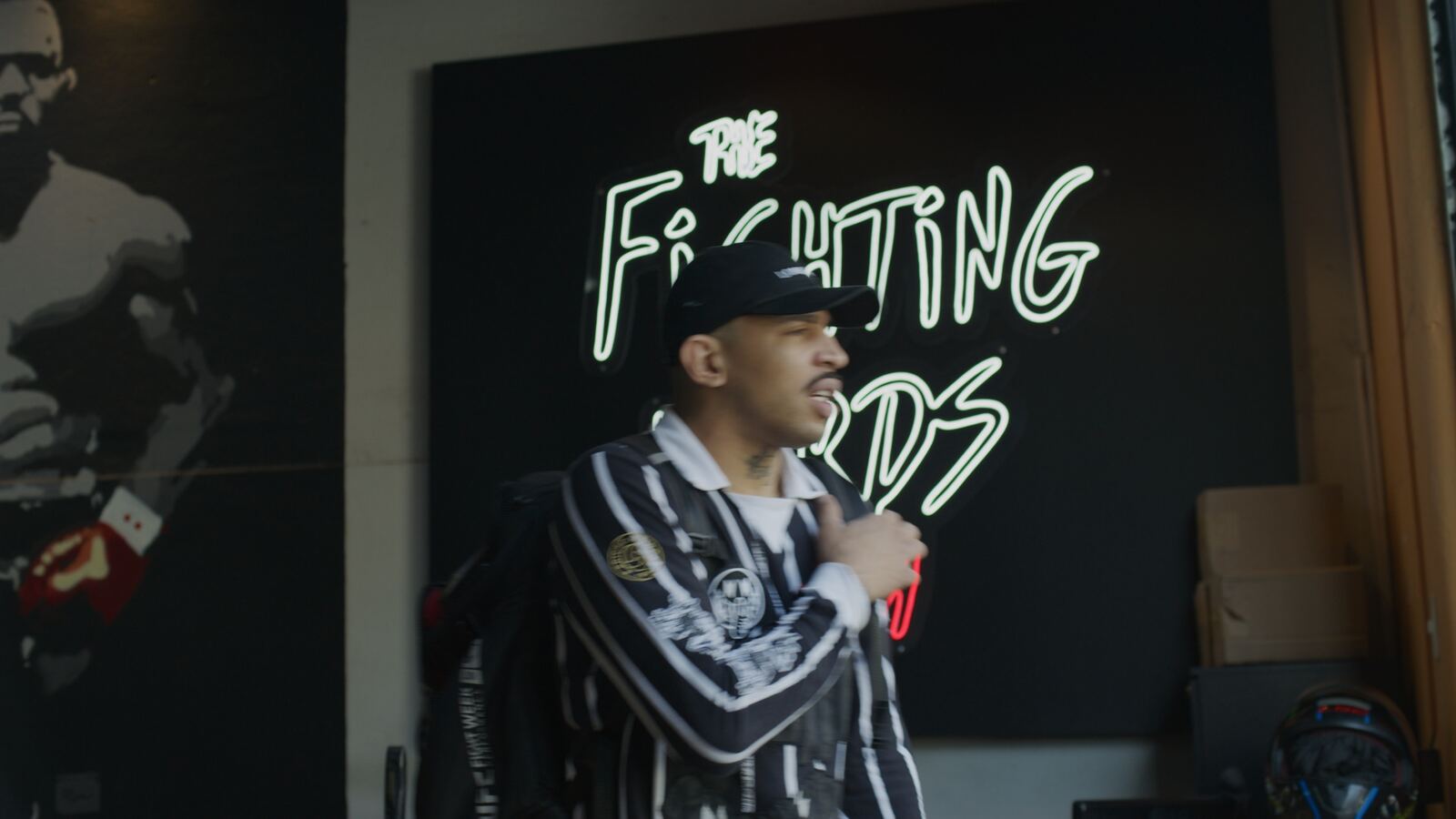
The Fighting Nerds neon, Prates’ second home.
Inside the octagon
In the first shoots, we explored the dramatic zooms from privileged angles inside the octagon. We captured the close-up images that have become a signature of our work, the OTFs, everything the documentary calls for, always committed to preserving authenticity. Prates is a genuine athlete, unlike anyone else. When you film with him, there is no need to invent much: you just have to pay attention.
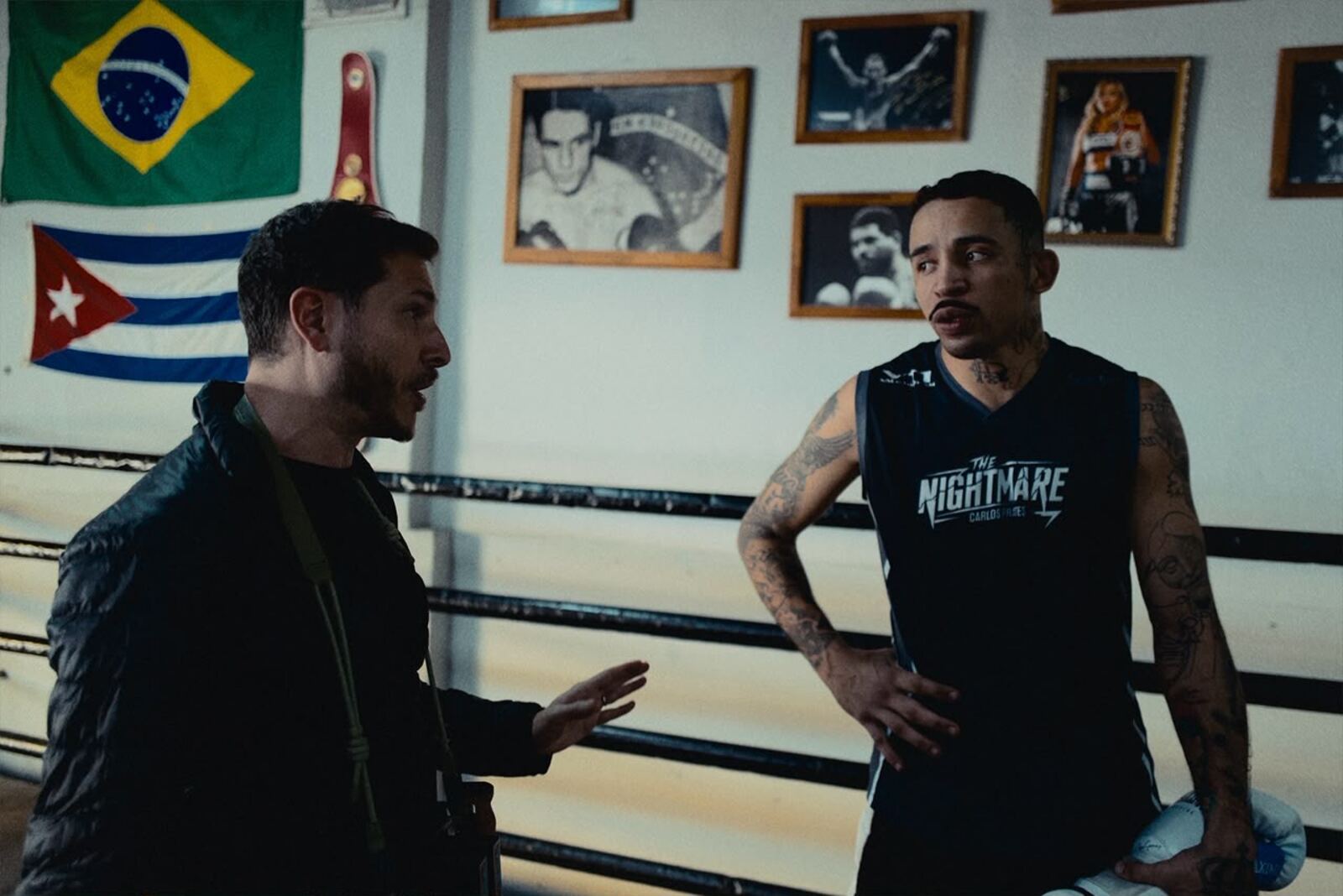
Talking through a scene with Prates between takes.
Inside Gaviões da Fiel
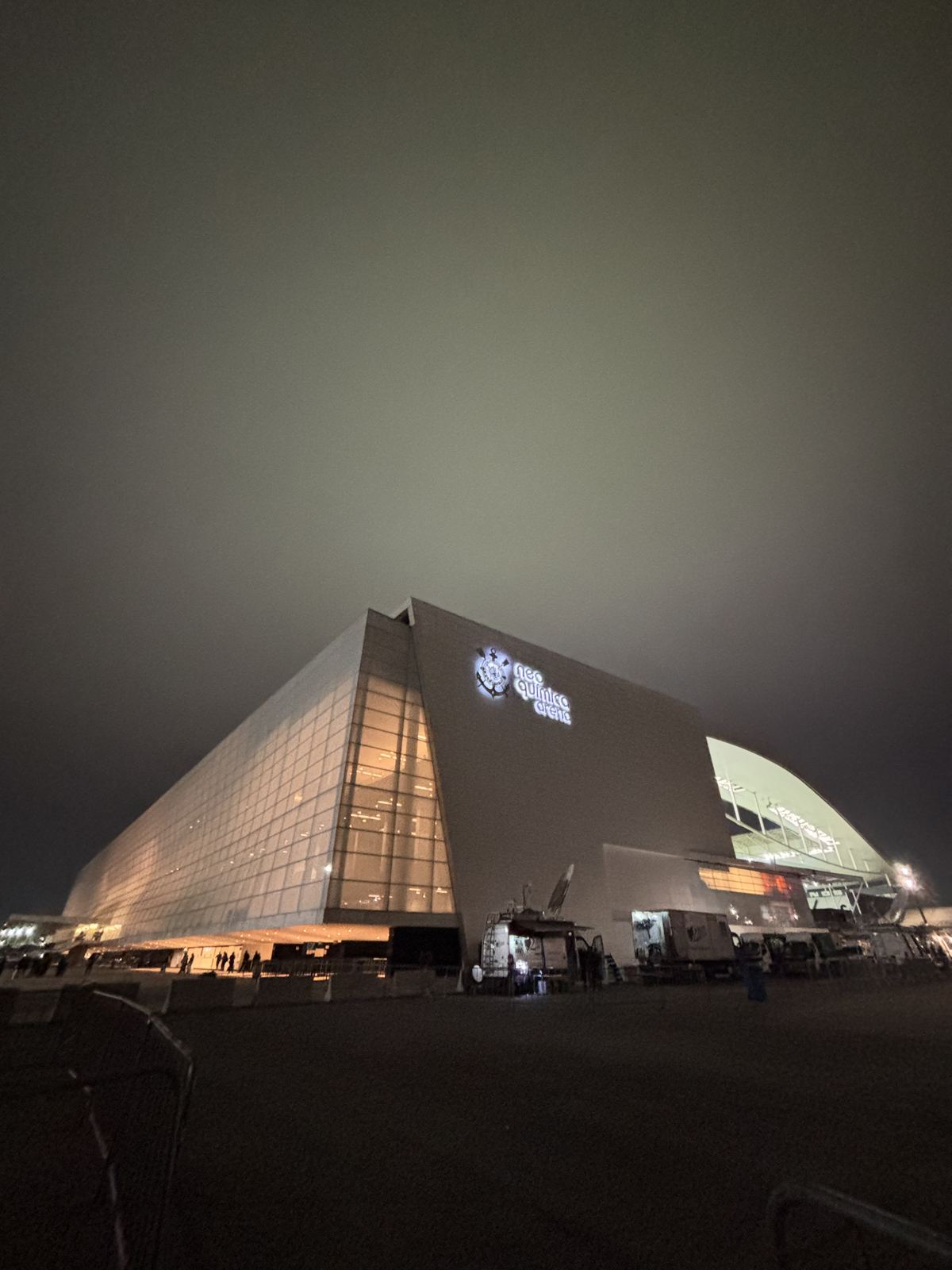
The second stage took us into the Corinthians universe. We went with Prates to Neo Química Arena, in Itaquera, São Paulo, a place he often visits with friends and where he is always welcome. We captured plenty of footage of him around the stadium and achieved something rare: entering Gaviões da Fiel, the largest organized supporters' group of Corinthians.
Neo Química Arena on matchday night.
Access is not simple. You need authorization, you must wear black, and phones are not allowed. Thanks to Prates and Lucas, his agent, the doors opened for us. What we experienced inside was intense.
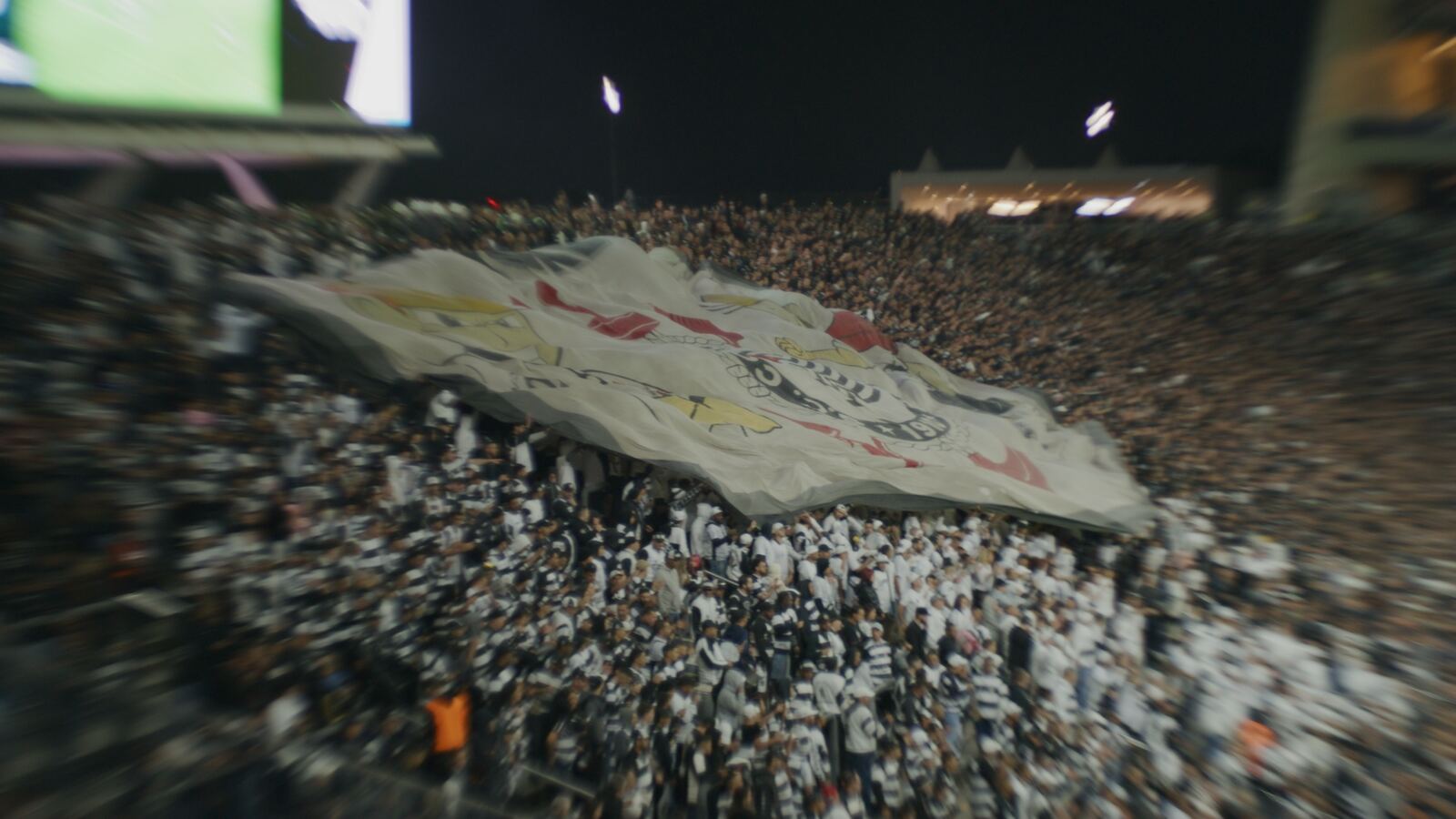
The bandeirão sweeping over Gaviões da Fiel.
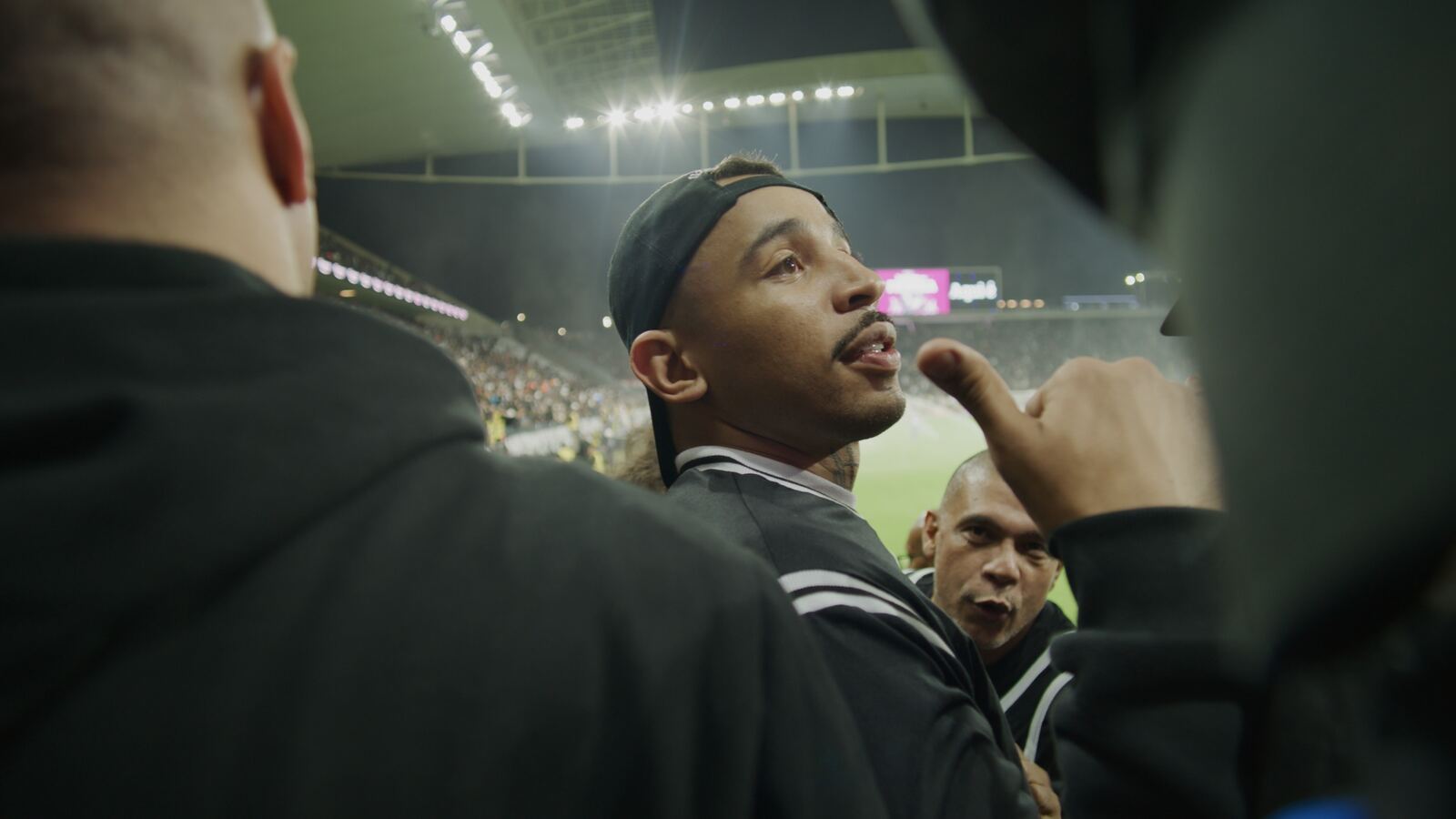
We filmed, though not exactly as planned: the cameras were limited and we were pressed into the middle of the crowd, singing the entire time, because in there you sing the entire time. Luckily I am a Corinthians fan myself, so that was never a problem. Even in that chaos we came away with valuable images, ones that translate what it truly means to stand inside a supporters' section. We also captured Prates talking with the players and taking photos with everyone around.
In the middle of Gaviões, where you sing the entire time.
What comes next
This stage reveals Carlos Prates' Brazil. Next week we film in Taubaté, his hometown, and then we head to Thailand to close the documentary. These three points, São Paulo, Taubaté and Thailand, structure the narrative and tell the fighter's journey.
And they finally reveal who the real Nightmare of the UFC is.
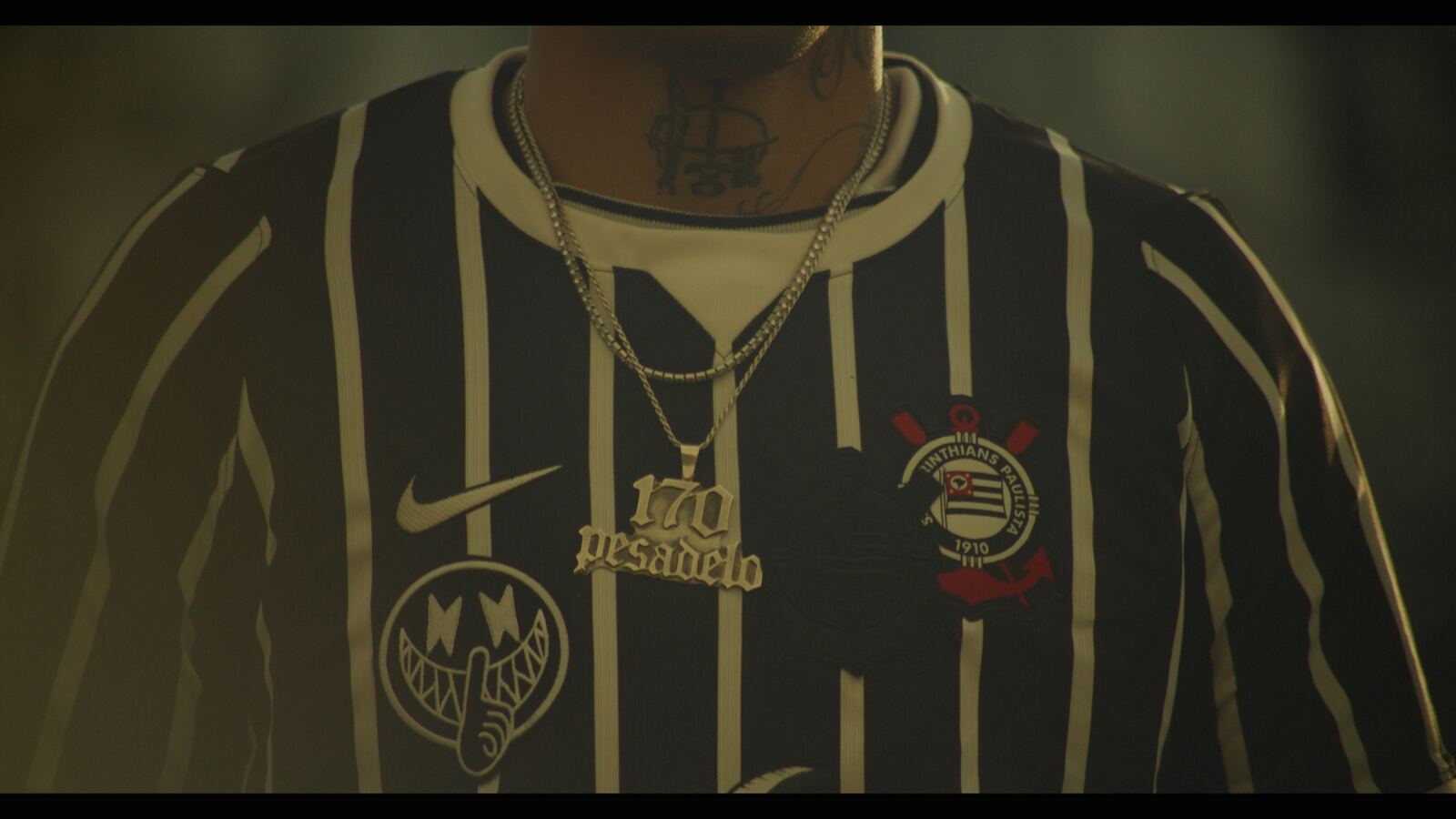
170 Pesadelo.
Versão em português
Estamos contando a história de Carlos Prates, e apresentar ao mundo o verdadeiro Pesadelo do UFC exige uma linguagem visual à altura do personagem.
Esta temporada carrega um significado especial para mim. Estamos contando a história de Carlos Prates, e apresentar ao mundo o verdadeiro Pesadelo do UFC exige uma linguagem visual à altura do personagem.
As escolhas técnicas
Nesta temporada, eu e o Ton Souza, nosso diretor de fotografia, decidimos trazer duas novas lentes para o projeto em busca de uma autenticidade verdadeiramente cinematográfica. É uma linguagem que vínhamos observando e admirando em outras produções.
A primeira é uma super zoom, que nos permite zooms dramáticos e mais tempo de tela em cada plano. A segunda é uma Petzval, uma lente vintage com um bokeh característico: ela cria um halo ao redor do personagem central. Vamos reservá-la para planos específicos e especiais, principalmente nas filmagens na Tailândia e em Los Angeles, e para as entrevistas. O depoimento olhando direto para a câmera é um dos pilares desta série, e queríamos que ele tivesse uma identidade visual própria.
Para todo o resto, seguimos com a RED Komodo. As novas lentes entram justamente para dar à temporada seu toque de fotografia cinematográfica.
Dentro do octógono
Nas primeiras diárias, exploramos os zooms dramáticos a partir de ângulos privilegiados dentro do octógono. Capturamos os closes que se tornaram marca do nosso trabalho, os OTFs, tudo o que o documentário pede, sempre comprometidos em preservar a autenticidade. O Prates é um atleta genuíno, diferente de qualquer outro. Quando você filma com ele, não precisa inventar muita coisa: basta prestar atenção.
Dentro da Gaviões da Fiel
A segunda etapa nos levou ao universo do Corinthians. Fomos com o Prates à Neo Química Arena, em Itaquera, São Paulo, um lugar que ele frequenta com os amigos e onde é sempre bem-vindo. Capturamos muitas imagens dele pelo estádio e conseguimos algo raro: entrar na Gaviões da Fiel, a maior torcida organizada do Corinthians.
O acesso não é simples. É preciso autorização, é preciso vestir preto, e celulares não são permitidos. Graças ao Prates e ao Lucas, seu empresário, as portas se abriram para nós. O que vivemos lá dentro foi intenso.
Filmamos, embora não exatamente como planejado: as câmeras eram limitadas e fomos prensados no meio da torcida, cantando o tempo inteiro, porque lá dentro se canta o tempo inteiro. Por sorte sou corinthiano, então isso nunca foi um problema. Mesmo naquele caos, saímos com imagens valiosas, que traduzem o que significa de verdade estar dentro de uma torcida organizada. Também registramos o Prates conversando com os jogadores e tirando fotos com todos ao redor.
O que vem por aí
Esta etapa revela o Brasil de Carlos Prates. Na próxima semana filmamos em Taubaté, sua cidade natal, e depois seguimos para a Tailândia para fechar o documentário. Esses três pontos, São Paulo, Taubaté e Tailândia, estruturam a narrativa e contam a jornada do lutador.
E finalmente revelam quem é o verdadeiro Pesadelo do UFC.
Melk Costa, the Dalmatian: a fighter from Pará, from a small town called Porto de Mós. His story goes beyond fighting.
I'll start by talking about our latest shoot for a series with the Ultimate Fighting Championship, a format I've been exploring a lot lately: short biographical portraits of athletes who carry more than just performance inside the cage.
Melk grew up dealing with prejudice because of vitiligo. In a place where information is limited, his condition was seen as something much more serious than it actually is. That shaped how he saw himself. It took time for him to accept who he was.
Fighting became a way out. And over time, it became a tool.
Today, he uses his own image as a statement. He turned what was once a weakness into a message: being different is normal.
Reading the character
There was already some material shot in Porto de Mós by another crew. Our job was to complete the narrative, to close the arc.
We went to the countryside of São Paulo, in Bauru, to meet Melk at his home and at the gym, led by João Emílio, an important figure in MMA, coming from the lineage of Chute Boxe Academy, founded by Rudimar Fedrigo.
From the start, it was clear who the character was. Melk is open, expressive, playful. He uses humor as a bridge, and also as a defense mechanism. That's not a detail. It defines the approach.
As a documentary director, you have to read that fast. I understood that forcing a heavy interview from the beginning wouldn't work. The way in was through humor, through lightness, and from there, reaching the deeper layers.
Because they're there. And they matter. Every good story needs contrast.
Building image with what you have
The gym was simple: well-structured, but visually raw. And that's a good thing.
With the cinematographer, we started looking for spaces where we could create more poetic moments within that environment.
The biggest challenge was a mirror scene. We needed to visually translate his relationship with his own image. We found an old, stained mirror in the locker room, and built the scene there.
We turned on the showers to create steam. We shaped the light to bring texture. The result was exactly what we were looking for: imperfect, organic, real.
The Dalmatian
One of the visual ideas was to connect Melk's black-and-white skin with that of a Dalmatian. It wasn't just aesthetic. It was conceptual.
And that's where the invisible side of documentary comes in: production. Finding a Dalmatian in Bauru wasn't easy. When we did, it came with a bonus: an active, restless dog, impossible to fully control.
But that's the game. You don't fight the chaos. You use it.
In the end, we captured a strong scene, alive and spontaneous, with the dog interacting with him. And that says more than any explanation ever could.
Adapt or lose
Documentary is constant adaptation. You plan, you script, you structure. But in reality, the character sets the rhythm.
And athletes are like that: they train when they need to train. They're available… until they're not.
We always aim for golden hour. This time, we couldn't get it. So we adapted. We created a scene in a parking lot, simple, and decided to take it into black and white in post.
And that became language. The absence of color started to directly dialogue with the theme of vitiligo. Not as a limitation, but as a visual choice.
About image
In the end, what stayed with me the most from this shoot was this: Melk is someone who once struggled with his own image, and now uses that image as strength.
He took ownership of what used to hurt him. It became identity. It became narrative. It became character. "The Dalmatian," as he calls himself.
Because in sports, many perform. But very few turn vulnerability into story.
What comes next
We have a beautiful film in our hands. But more importantly, we have a story with truth, and truth always shows on screen.
I'll be back soon with the trailer and a deeper breakdown of the process. Because in the end, it's not just about the film. It's about how we got there.
The hardest thing for a director inside a gym is not to direct. Fighters work on a rhythm you can break by breathing in the wrong place.
I used to give notes between rounds. I thought I was being helpful. I was being noise. A fighter in their tenth round doesn't need a note. They need the person they trust to be the one who isn't asking them for anything.
Now I sit. I let the corner do the talking. The camera is already in the right place because we decided that hours ago, with the lights, with the walls, with the fighter. If I have an instinct in the moment, I save it for the edit.
The fighter isn't your subject. They're the person carrying the story you think is yours.
It took me three seasons of fight content to understand that the best directors on these sets are the ones you don't notice are there. They became invisible because they already did their work. A quiet set is almost always the sign of a prepared one.
If you have to ask for something during the fight itself, you already failed earlier in the week. That's the note I give to myself now.
Three weeks at altitude in Chile and Argentina, with a three-person crew. The mountain did half of our directing for us, which is to say, it told us exactly when to stop.
The first thing altitude takes from you is your conversations. Above 3.500 meters, people talk less. Sentences get shorter. You film the silences instead of pushing through them. That is a gift, if you let it be one.
What we learned
Batteries die fast. Cold halves everything. We stopped charging at night and started charging at every meal stop. Three cameras, twelve batteries, one shared worry.
Sound is the real problem. Wind above the tree line is constant. We abandoned the boom on day two and wore lavs that lived under wool. We stopped trying to record ambience and recorded the absence of it instead.
The talent is stronger than the crew. Our subjects lived up there. We didn't. Respect the gap. Plan for two shoot hours, not eight. Eat at noon. Sleep at 5.
You don't film the mountain. You film how the mountain treats the people on it.
The best frames were the ones we almost didn't get. Our DP's hands were cramping. Our sound person had a headache for six days. None of that is in the film. What's in the film is the wind, the walk, and the way a person's face gets very still when they're counting their own breaths.
The documentary is not the truth, it's a relationship.
Every documentary I've worked on has been, in the end, a relationship between me and a person who agreed to be looked at. The film is the artefact of that relationship. The truth is elsewhere.
This is not a cynical position. It's a responsible one. When I accept that a documentary is a relationship, I also accept responsibility for how that relationship ends. Most of them don't end on the last day of shooting. The best ones don't end at all.
I've had fighters call me four years after a shoot to tell me about a loss. A surfer send me a video of his kid walking for the first time. A grandmother in Havana ask me to send another print of a photo because the first one got wet. The film was never the point. The film was a very long way to meet someone.
Access is not a resource to be extracted. It's a trust to be returned.
A short rule I try to keep
If the person in front of the camera would be ashamed of a scene I'm about to cut in, I don't cut it in, even if it's the strongest footage in the film. Not because I'm above using strong footage. Because the film will still be good without it, and the relationship will not survive it.
I've been wrong about this a few times. I've also been right about it enough to keep using it as a rule.
A three-person crew is not about budget. It's about attention. A small crew is the only crew in which every person can carry the whole story in their head at the same time.
I've directed shows with eighty people on call. I've directed films with three. The three-person films are usually the ones I still think about years later. Not always. But usually.
Here's the trade: a big crew buys you coverage. A small crew buys you presence. On a small set, the subject stops performing after about twenty minutes because there's no audience. On a big set, the performance never really stops. Both have their place. I work in a register where presence is worth more than coverage almost every time.
What a three-person crew actually is
One person with the camera. That person is also the director, usually. They make the frame and the choice inside the same decision.
One person with the sound. They are the only person who ever says "stop." The camera can be wrong and we'll get another chance. Sound is permanent.
One person who carries the day. Schedule, logistics, conversation with the subject, food, water, batteries. This person is the reason the other two can concentrate.
Three people, one lens, and a promise not to take more than we need.
I know this isn't how most production happens. I know it's often not possible. When it is possible, I still pick it first.